

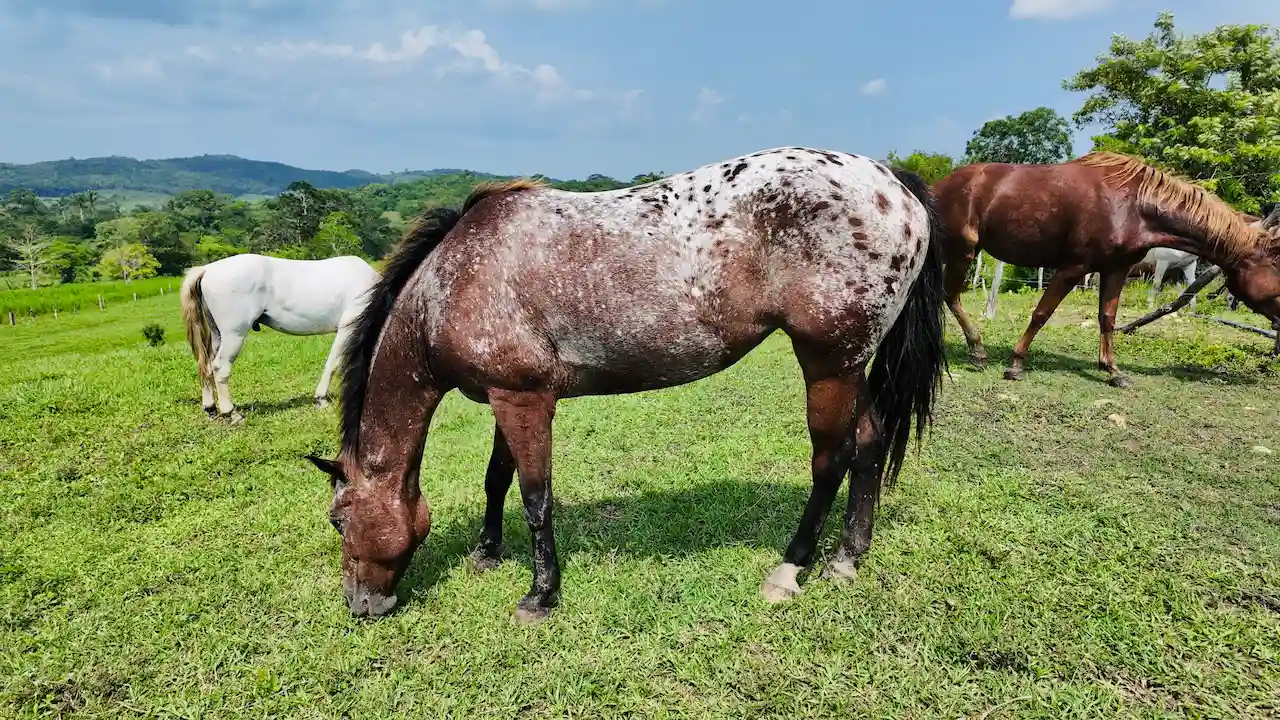
BELIZEAN HERITAGE
Horses in Belize
From working farms and the chicle trade to horseback adventures, discover the place of horses in Belize’s history and countryside.
ST. LEONARD’S TOURS · November 9, 2026
HORSES & THE BELIZEAN COUNTRYSIDE
Horses in everyday Belize
Belize’s relationship with horses is long and colorful. Initially they were used for light field work and transportation between inland settlements.
However, the growth of cattle farms in the west and north of the country meant they became an essential part of the economy.
Initially, ‘criollo’ type horses, short and tough, were the dominant breed but quarter horse blood was soon introduced. Crosses between the criollos and the quarter horses became the dominant all-purpose animals for farm work.
Across rural Belize, horses have been more than a way to travel. They have also been associated with the daily routines of farms and ranches: moving between fields, tending livestock and reaching places where motor vehicles were not always practical. That history helps explain why horses remain familiar in the countryside, even as the work they do has changed.
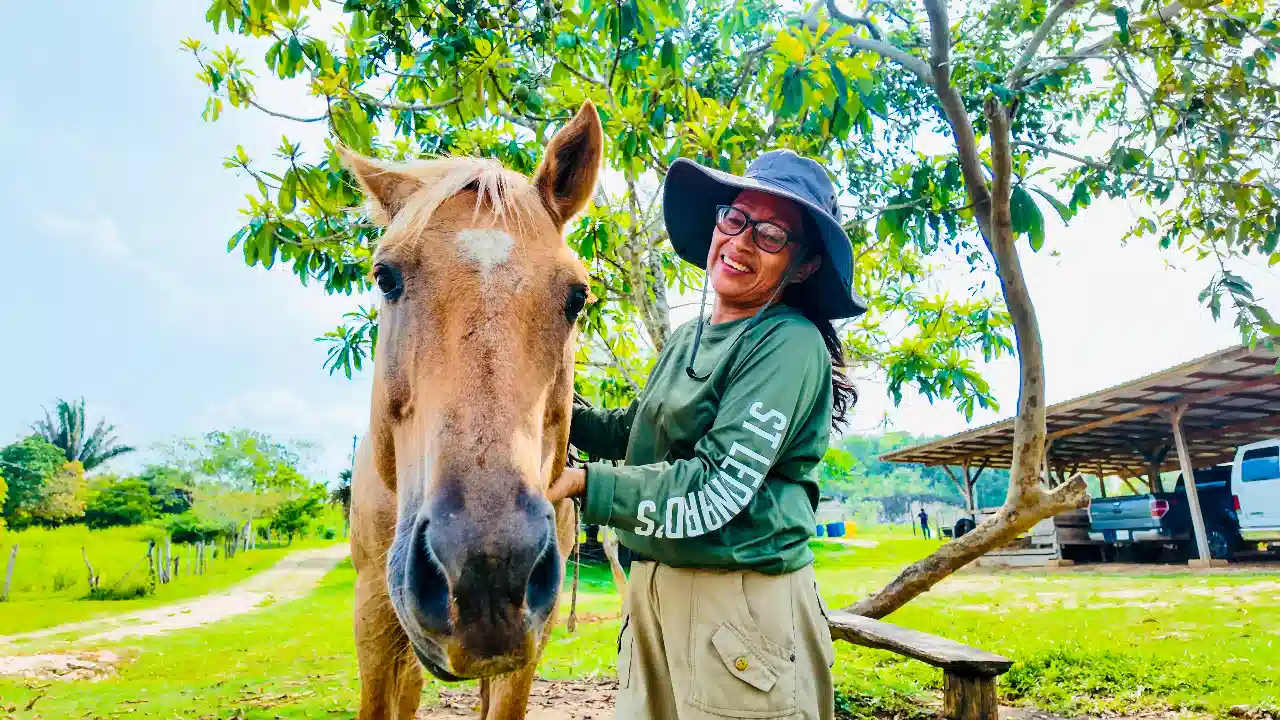
Carla and Asher at St. Leonard’s Belize in Cayo, Belize.
THE FOREST TRADE
Horses, mules and the chicle industry
The growth of the chicle industry saw the demand for horses and mules grow significantly. As mule and horse trains supplied the chicleros in the industry and brought the chicle to the towns, they were critical for the industry’s growth.
Chicle is a natural latex taken from the sapodilla tree. It once played a major role in the manufacture of chewing gum. The people who collected it were known as chicleros, and their work often meant spending long periods in remote forest camps.
Supplies had to reach those camps, and the gum had to be carried out. Mule trains were an important part of that difficult journey. The Belize Tourism Board’s tour-guide training materials describe contractors supplying tools and provisions to chicleros, and historical forest research also records mule trails associated with the trade.
This history is especially relevant in western Belize, where settlements such as Benque Viejo del Carmen and San Ignacio were linked to the forest economy. Looking at the role of horses and mules reveals a practical side of Belizean history that is easy to overlook when visiting the country today.
TWO TERMS FROM THIS HISTORY
Chicle: natural sapodilla latex once widely used in chewing gum.
Chiclero: a worker who tapped sapodilla trees and collected the latex.
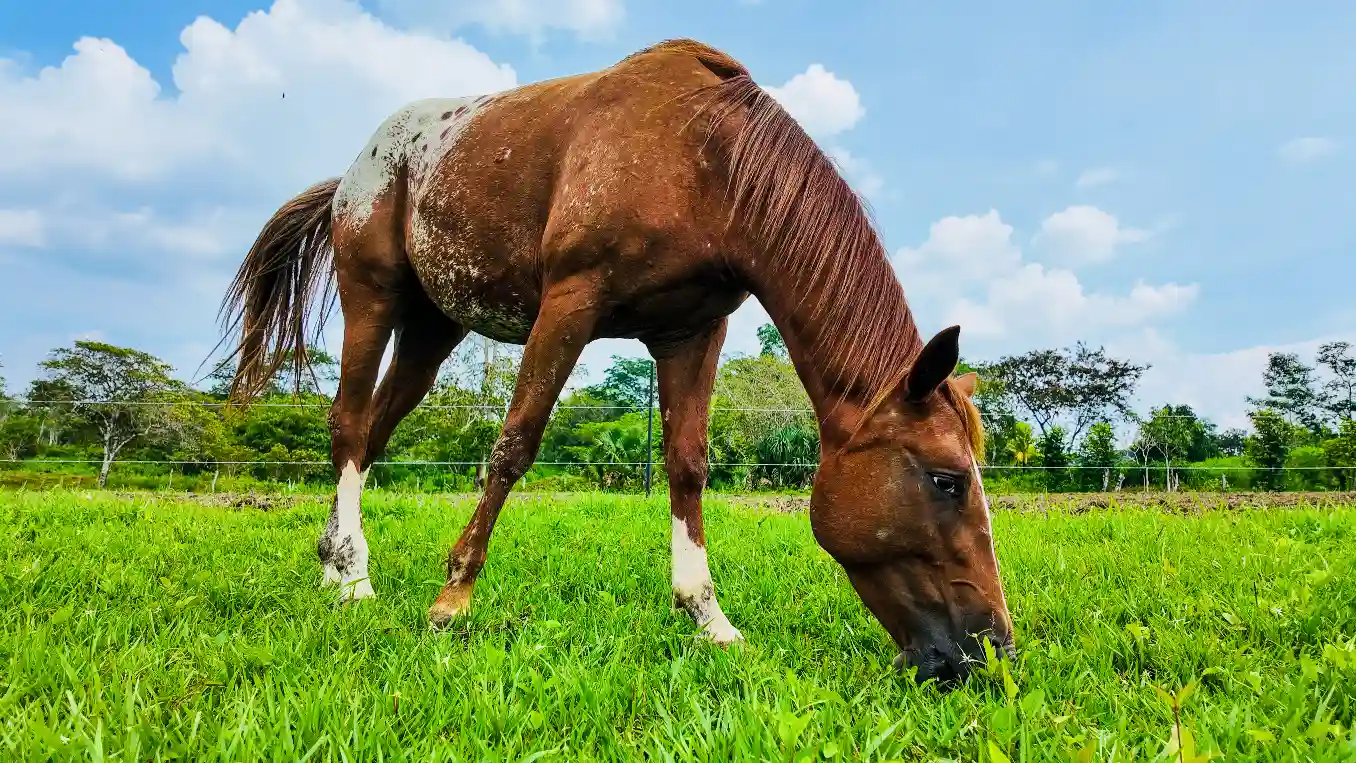
Micah at St. Leonard’s Tours. Modern farm photograph, not a historical chicle scene.
FROM FARM WORK TO TRAIL RIDING
Working horses and modern trail riding
Today, most horses are used in the traditional Mennonite communities for general farm work and pulling buggies. These horses also tend to be a mix of quarter horse, Arab and thoroughbred breeds.
Horse-drawn buggies and animal-powered farm work remain part of life in some more traditional Mennonite communities, although customs vary. Communities such as Shipyard and Little Belize differ in their use of machinery and transport from other Mennonite settlements.
In fact, these have become the dominant breeds for all purpose farm work throughout the country. Appaloosas are also growing in popularity as trail horses for horseback riding to waterfalls and ancient Maya ruins within the tourism industry.
Horseback riding has also found a place in visitors’ experiences of western Belize. A guided countryside ride offers a different pace from travelling by road: the landscape unfolds gradually, from open fields to shaded trails, and the ride itself becomes part of the journey rather than simply a way to reach a destination.
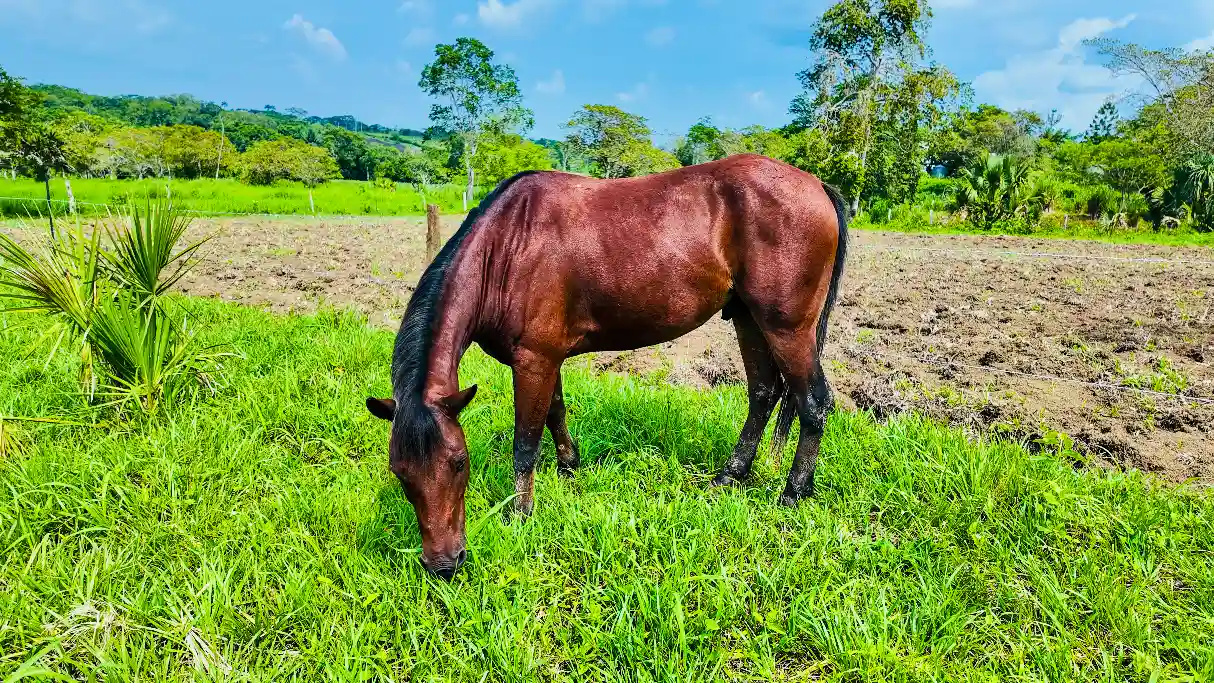
Amos at St. Leonard’s Tours.
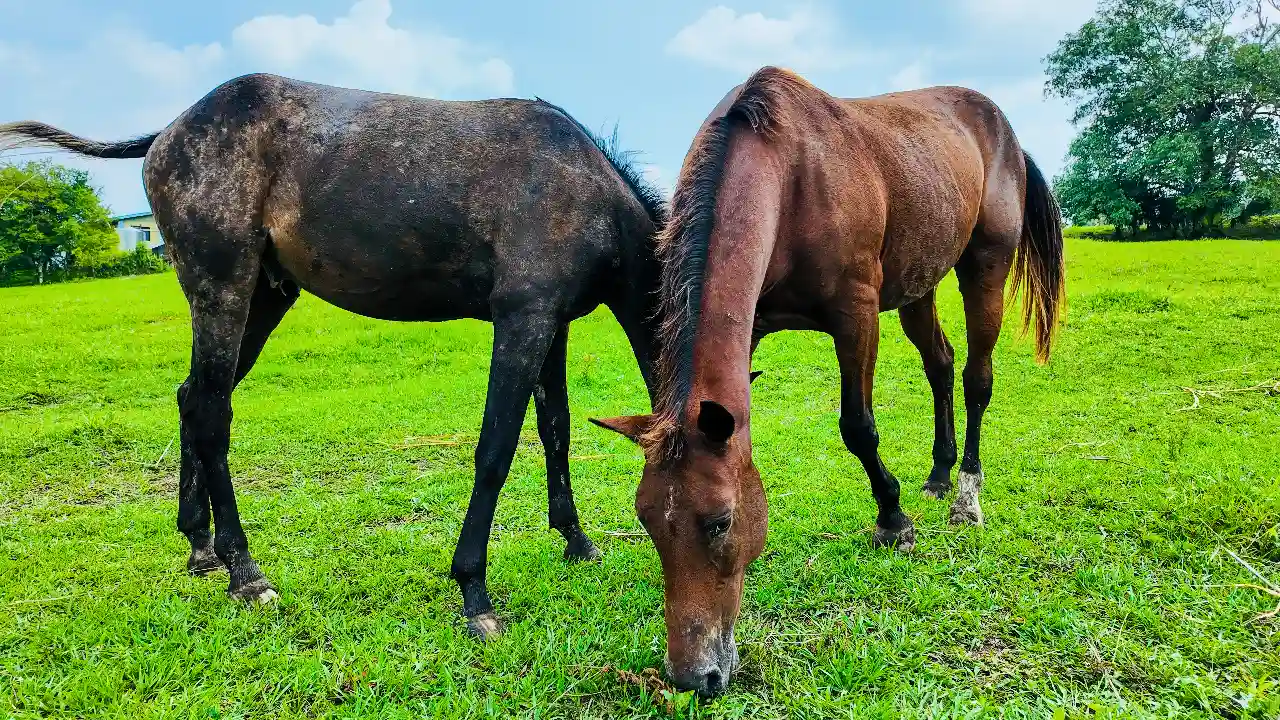
Adinah at St. Leonard’s Tours.
With their undoubted beauty, endurance and strength, horses will continue to be an important part of Belize’s rich cultural heritage.
AT SAN LORENZO FARM
Meet some of the horses at St. Leonard’s
For the Juan family, horses are not simply part of Belize’s past. St. Leonard’s Tours grew from San Lorenzo Farm in the Cayo District, where farming and caring for animals were part of the family’s life before guided excursions became part of the business.
Today, the farm forms the setting for guided horseback riding near San Ignacio. The photographs below introduce some of the horses by name. They also put faces to a small piece of the wider story of horses and rural life in Belize.
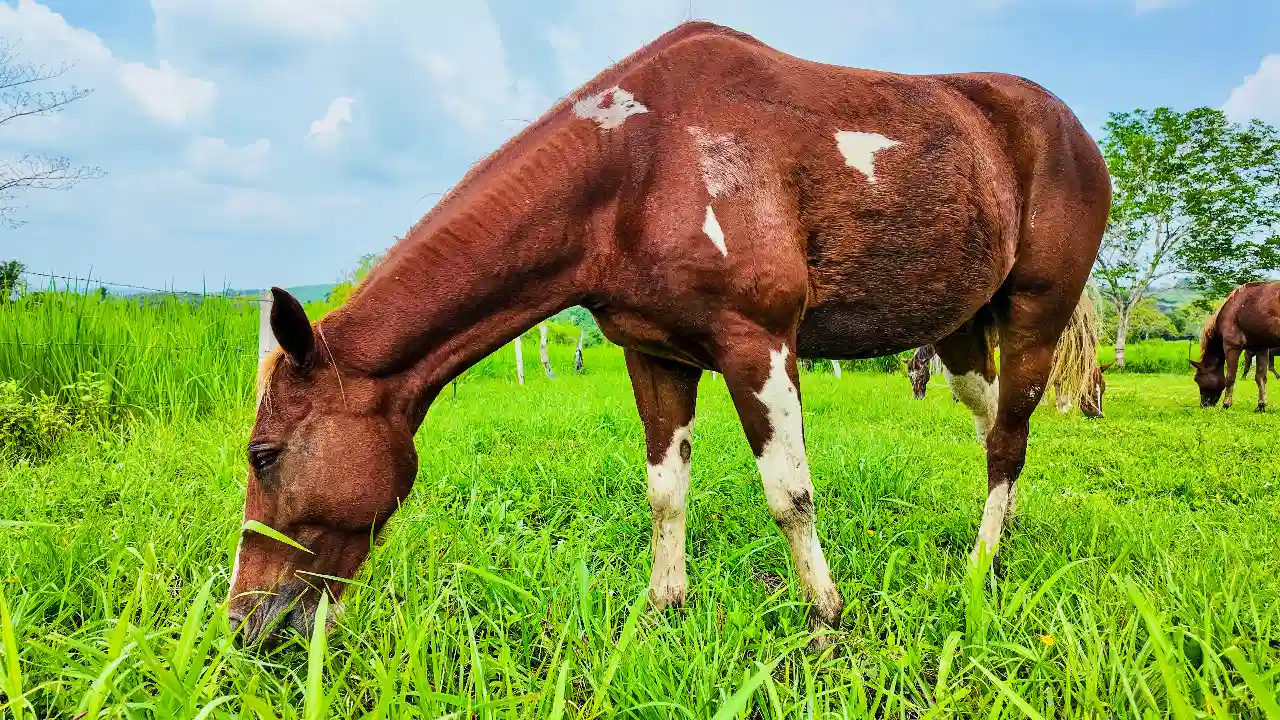
Baruch at St. Leonard’s Tours.
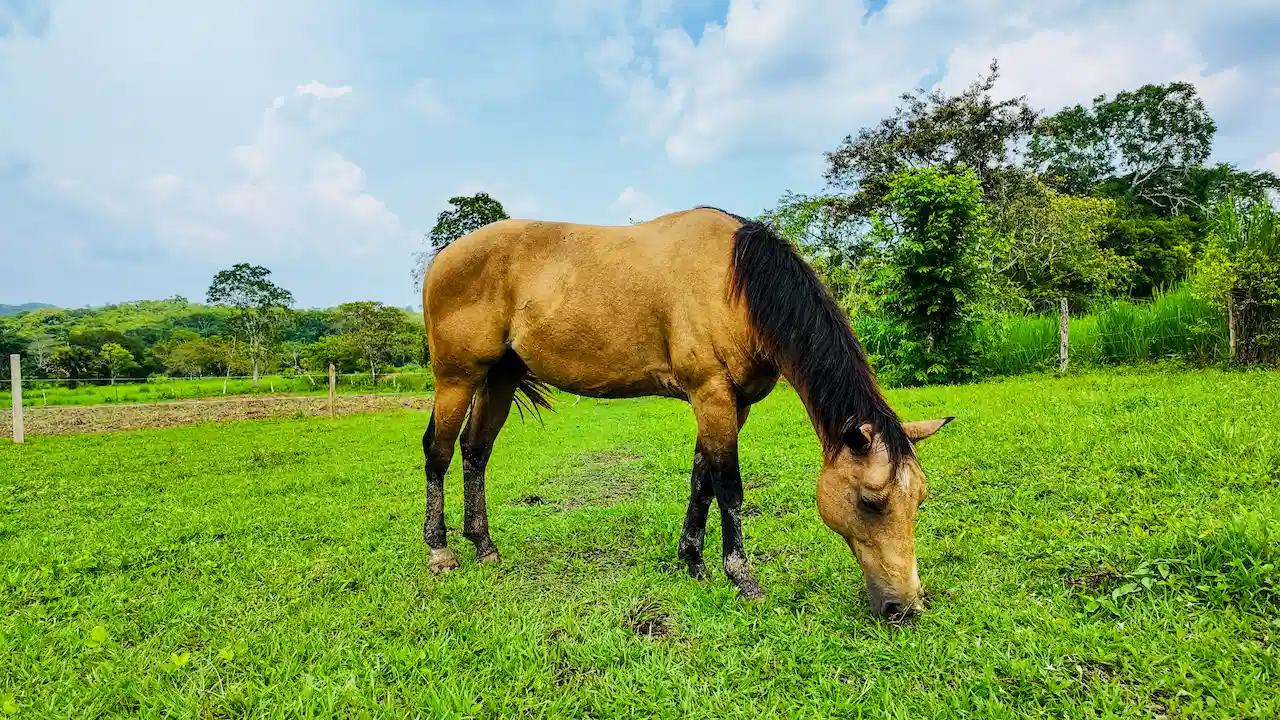
Moses at St. Leonard’s Tours.
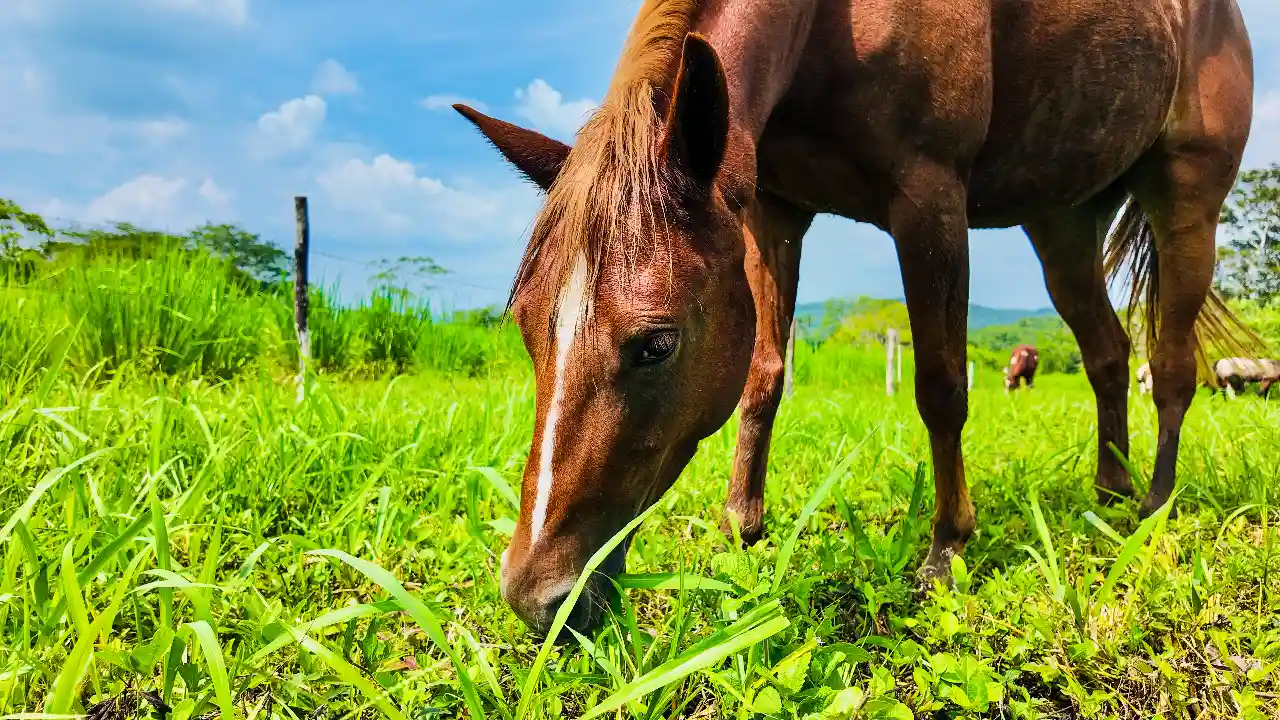
Sara at St. Leonard’s Tours.
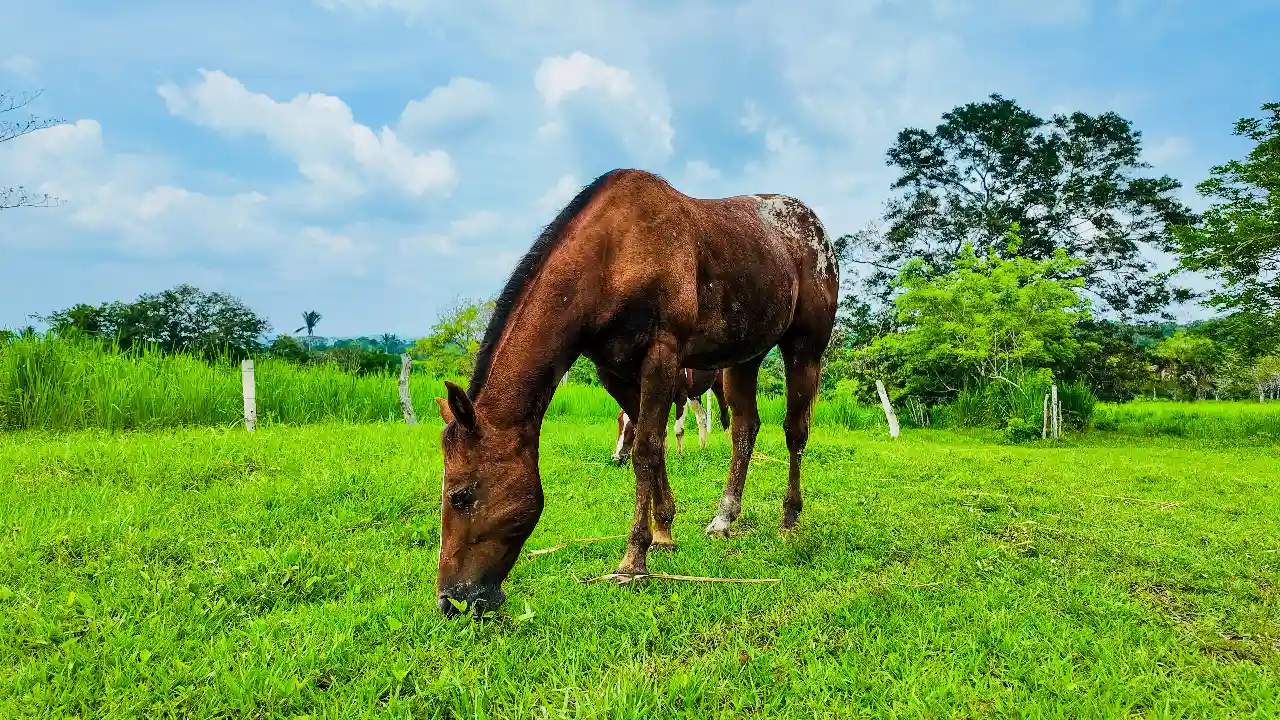
Zach at St. Leonard’s Tours.
Visitors who would like to experience the countryside on horseback can learn about St. Leonard’s guided farm ride at San Lorenzo Farm. The tour page explains current riding requirements, timing and arrangements.
Explore the San Lorenzo Farm horseback rideORIGINAL ARTICLE & SOURCES
The original “Horses in Belize” article was written by Mary Juan and published on November 18, 2023. Its original wording has been retained above, with added historical context and photographs for this edition.
Belize Tourism Board — Tour Guide Training (chicle history)